
A Toymaker Who Turned Dead Children Into Dolls – A True Horror Case
There are some people who don’t look dangerous.
They don’t raise their voices. They don’t draw attention.
They don’t leave behind chaos or broken things
that make others stop and stare. They blend in. They exist quietly,
moving through ordinary routines with a kind of calm that feels… safe.
Those are the ones no one questions.
And sometimes, those are the ones who should be questioned the most.
In the industrial city of Nizhny Novgorod, winters pressed down like a weight
that never fully lifted. The buildings stood close together,
gray and tired, their windows reflecting a sky that rarely felt alive.
People kept to themselves. They worked, they went home, and
they learned not to look too closely at what didn’t concern them.
It was the kind of place where a man could disappear in plain sight.
His name was Anatoly Moskvin.
To most people, he was forgettable.
Educated. Quiet. A man who spent more time with books than with people.
He spoke several languages, wrote articles that few read,
and carried himself with a kind of distant politeness
that made others leave him alone.
He lived with his elderly parents in a modest apartment.
Nothing about him suggested danger.
Nothing about him suggested what he was doing after the sun went down.
At night, when the city settled into silence, Moskvin would leave the apartment.
He never made noise when he left. Never disturbed his parents.
He dressed simply, always the same dark coat,
always the same steady pace as he walked out into the cold.
He walked to places most people avoided.
Cemeteries.
Not the well-kept ones in the center of the city, but the older ones.
The forgotten ones. The places where the gates creaked
when they opened and the paths had long since been claimed by weeds and time.
He walked among the graves like someone who belonged there.
Not hurried.
Not afraid.
Just… familiar.
At first, no one noticed.
Or if they did, they didn’t think much of it.
A man visiting cemeteries isn’t unusual. Grief has many forms.
Some people go often. Some people go late.
Some people prefer the quiet of night.
No one asked why he went so often.
No one asked what he was doing there.
Because asking questions requires attention.
And attention is something people rarely give unless they have to.
It went on for years.
Nearly a decade.
Long enough for routine to become invisible.
Long enough for something unnatural to feel… normal.
Inside his apartment, Moskvin had a collection.
That’s what his parents believed.
That’s what anyone who might have stepped inside would have believed at first glance.
Dolls.
Life-sized dolls.
Carefully dressed.
Arranged neatly across the room.
Some sat on chairs. Some rested against the walls.
Others were placed on the sofa, as if they had simply been left there
after a conversation that had ended moments before.
They wore dresses.
Stockings.
Shoes that had been cleaned and positioned with care.
Each one was different.
Each one felt… intentional.
At a distance, they could have been mistaken for something artistic.
Unusual, yes—but not disturbing.
Not immediately.
Because the human mind does something interesting
when it encounters something it doesn’t understand.
It fills in the gaps.
It explains things away.
It chooses the simplest answer.
They’re just dolls.
That’s all.
But the closer you got…
The harder it became to hold onto that explanation.
There was something wrong.
Not something obvious.
Not something you could point to and name.
Just a feeling.
A quiet resistance somewhere in your chest.
A sense that you were looking at something you weren’t supposed to see.
And then there was the smell.
It didn’t hit you right away.
It lingered.
Subtle at first.
Easy to ignore.
But once you noticed it…
You couldn’t stop noticing it.
It clung to the air.
Heavy.
Sweet in a way that felt wrong.
Like something that had been hidden for too long.
In 2011, that quiet routine ended.
Police entered the apartment.
At first, it was just another investigation. A report.
A concern raised. Nothing out of the ordinary.
They stepped inside expecting disorder.
They found something else.
The room was… arranged.
That was the first thing they noticed.
Everything had a place.
Everything had been positioned with care.
And everywhere they looked—
There were dolls.
Watching.
Sitting.
Waiting.
One officer stepped closer.
Just one step.
And that was enough.
Because distance had protected them.
Distance had allowed the illusion to exist.
Up close…
There was no illusion left.
These were not dolls.
Not really.
There were twenty-six of them.
Each one small.
Each one shaped by hands that had taken time.
Too much time.
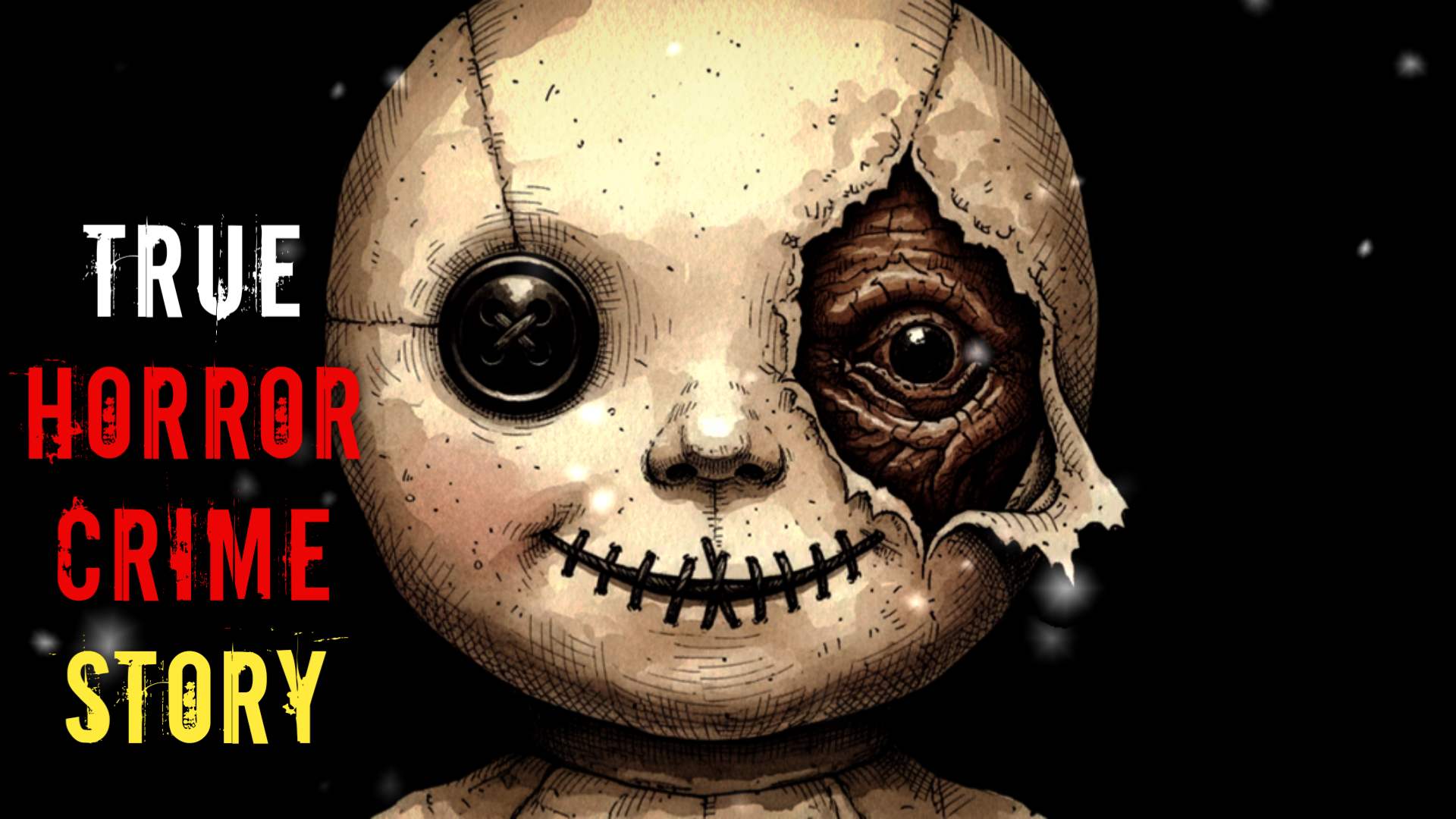
Some had faces made of fabric.
Stretched and stitched into place.
Others had crude features.
Buttons pressed where eyes should be.
Painted lines attempting to mimic expressions.
Smiles that didn’t belong.
But beneath the surface…
There was something else.
Something that couldn’t be ignored once it was understood.
They were made from remains.
Human remains.
Children.
The realization didn’t come all at once.
It came slowly.
In fragments.
Like the truth itself had to be assembled piece by piece.
For nearly ten years, Moskvin had been visiting cemeteries with a purpose.
Not to mourn.
Not to remember.
But to take.
He exhumed the bodies of young girls.
Carefully.
Quietly.
He brought them back to his apartment.
And there…
He transformed them.
But what disturbed investigators the most wasn’t just what he had done.
It was how he lived with it.
To Moskvin, these were not remains.
They were not victims.
They were not something to hide.
They were his family.
He dressed them.
He arranged their hair.
He positioned them around the apartment as if they were still part of the world.
He sat with them.
Talked to them.
Watched television with them.
Children’s shows.
Cartoons.
Programs meant for laughter.
He celebrated birthdays.
Set up small gatherings.
Arranged them in circles as if they were sharing something together.
Sometimes, he placed small music devices inside them.
So when touched…
They would make sounds.
Soft.
Childlike.
Almost like voices.
And in his mind…
That meant something.
Because Moskvin believed something deeply.
Something that shaped everything he did.
He believed they weren’t gone.
Not completely.
He believed that one day…
They would come back.
That their souls would return.
That they would wake.
That they would speak.
And when they did…
They wouldn’t be alone.
They would be home.
With him.
There was no fear in him.
No hesitation.
No sense that what he was doing was wrong.
Only certainty.
When he was arrested, he didn’t fight.
Didn’t deny anything.
Didn’t try to escape.
He explained.
Calmly.
Clearly.
As if he were describing something ordinary.
He said the world had abandoned them.
Left them alone.
Cold.
Forgotten.
And he…
Had brought them back.
Given them warmth.
Given them a place.
He saw himself as someone who had done the right thing.
That was the part no one could understand.
Doctors later diagnosed him with severe mental illness.
Paranoid schizophrenia.
He was declared unfit for trial.
Placed in a high-security psychiatric facility.
And officially…
That was where the story ended.
But not really.
Because some questions don’t go away.
They stay.
Quiet.
Persistent.
Like the question of how no one noticed.
Not his parents.
Who lived in the same apartment.
Who walked past those rooms every day.
Who saw the figures.
The shapes.
The outlines of something that wasn’t right.
They said they thought they were dolls.
A hobby.
A collection.
Something strange…
But harmless.
But investigators struggled with that explanation.
Because there are things you don’t miss.
Not completely.
Not for years.
The smell.
The silence.
The way those rooms must have felt.
How do you live beside something like that…
And not see it?
Or worse—
Choose not to?
And then there were the cemeteries.
The nights.
The routine.
How many times had he walked past someone?
How many times had someone seen him?
A quiet man.
Carrying something.
Moving with purpose.
And said nothing?
Because it didn’t feel like their business.
Because it was easier to ignore.
Because nothing looked obviously wrong.
That’s the part that lingers.
Not just what he did.
But how long he was able to do it.
How easily something like that can exist…
When no one looks closely enough.
Some stories are terrifying because of violence.
Because of chaos.
Because of something sudden and undeniable.
This one is different.
This one is quiet.
It builds slowly.
It hides in routine.
It survives on the absence of attention.
And that’s what makes it worse.
Because even now…
There are places like that.
Ordinary apartments.
Closed doors.
Rooms no one enters.
And behind them…
Something that doesn’t belong.
Something carefully arranged.
Perfectly still.
Waiting.
Not in the dark.
Not hidden away.
But sitting quietly…
In plain sight.
And the only reason it stays there…
The only reason it continues…
Is because no one is looking closely enough to see it.
If You Love This Story Please Read These Top Stories…
- A Woman Was Found in Suitcases
She Got Calls Every Wednesday 8:12 PM
The Night He Answered a Routine Call
- The Locked Room Beneath Her House


Pingback: He Turned Victims Into Walls
Pingback: What Happened in Room 17....the Most Haunted Motel in Texas